
Exhibitions
Current & Upcoming Exhibitions

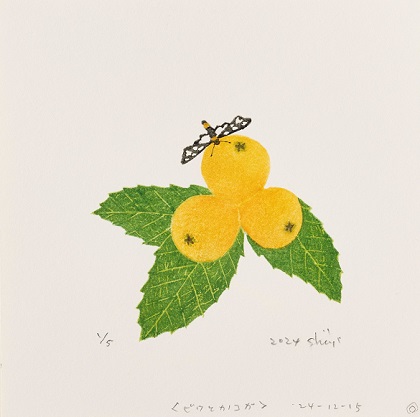
Yamamuro Shinji’s Potato Prints “Histoires Naturelles in Kamakura”
From the Museum Collection: In Everyday Life
Yamamuro Shinji (1939–) has developed and refined potato-block printmaking through self-directed study, while also undertaking numerous projects in book design and bookbinding. Alongside his existing works, this exhibition presents his new piece Hundred-Leaf Box, which incorporates words by the artist Shimura Fukumi (1924–, dyeing and weaving artist, essayist, Living National Treasure). Also on display are selected works from the Museum’s collection, including pieces by Aso Saburo (1913–2000) and others who drew inspiration from scenes of everyday life.
Image: Yamamuro Shinji, Loquat and Japanese nine-spotted moth, 2024, Private collection. Photo: Suzuki Shizuka
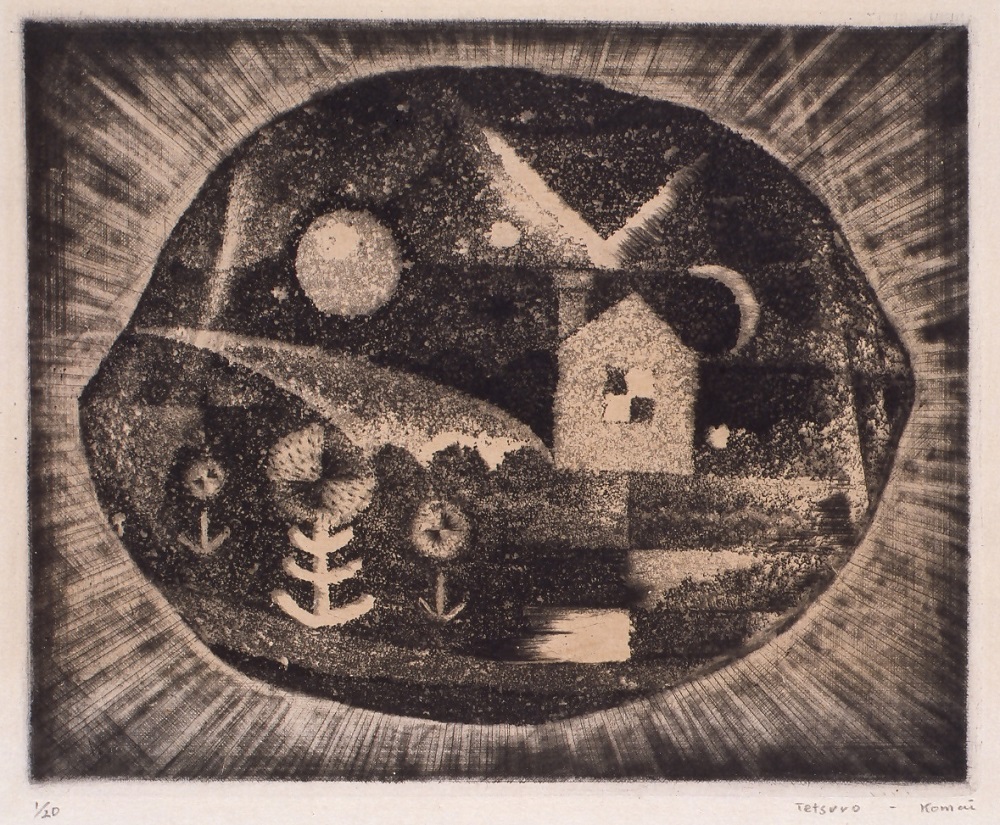
Copperplate Print Artist Komaï Tetsuro
Constellations on the Palm of His Hand
Komai Tetsuro (1920–1976), one of Japan’s most important copperplate engravers, left a significant mark on the history of Japanese printmaking. Primarily drawn from the Yoshiharu Fukuhara Collection at the Setagaya Art Museum, this exhibition features rarely seen early oil paintings as well as original illustrations for the fairy tale A Little Boy Lost , shown here for the first time. Through works by Komai, his copper plates, tools, photographs, and works by artists in Japan and abroad who influenced him—including Odilon Redon, whom he studied and deeply admired—the exhibition examines the breadth of his creative activity and artistic character.
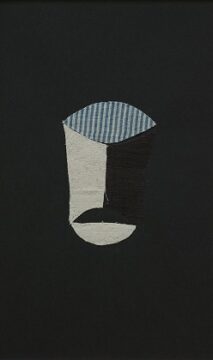
Tasogare, Kawatare: “In-Between” in Contemporary Art
From the Museum Collection
Tasogare (twilight) and Kawatare (dawn) —both also meaning "who is that?”—are archaic Japanese terms describing a time of day when the boundary between light and darkness gradually dissolves, and the outlines of things begin to blur. Focusing on the presence of kage, a term encompassing shadow, shade, and ambiguity, this exhibition traces uncertain forms and sensations found in twentieth-century art. On view are Yunoki Samiro’s (1922–2024) collage work Images in the Night, created from vintage fabrics; Okazaki Kazuo’s (1930–2022) Hisashi, positioned in the intervals of light; and photographs by Sugimoto Hiroshi (1948–) and Moriyama Daido (1938–) that capture shifting relations of light and shadow. Featuring many works acquired in recent years, the exhibition introduces a range of expressions that emerge in moments of transition and ambiguity.
Image: Yunoki Samiro, "Images in the Night”16, 2005, The Museum of Modern Art, Kamakura & Hayama. Photo: Ueno Norihiro
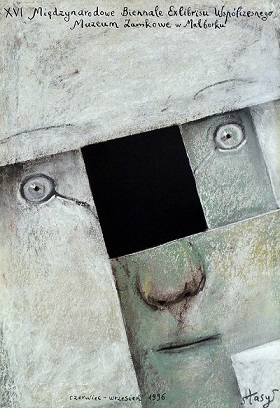
Polish Poster II from the Museum Collection: Former Collection of Copperplate Print Artist Watanabe Chihiro
Recognizing the international acclaim of Polish posters, copperplate engraver Watanabe Chihiro (1944–2009) began collecting them after visiting Poland in the immediate aftermath of the 1989 revolutions in Eastern Europe. His collection, totaling 250 works, was later donated by his family. Combined with the 295 posters already held by the Museum, it now forms a significant body of material for surveying the history of Polish poster design. This exhibition presents approximately seventy works by poster artists active before and after the political transformations of 1989, including Mieczysław Grochowski (1941–2011) and Stasys Eidrigevičius (1949–), selected from Watanabe’s former collection.
Image: Stasys Eidrigevičius, The 16th International Biennial of Contemporary Ex Libris, 1996, Museum collection
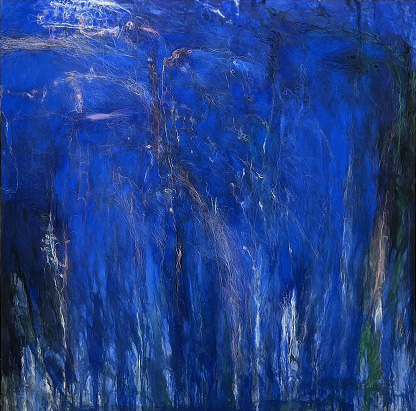
Matsumoto Yoko
The Day I Saw the Evening Star
Matsumoto Yoko (1936–) began pursuing abstract painting in the late 1950s. In the 1960s, encounters with Abstract Expressionism and acrylic paint in the United States led her to develop a singular pictorial language characterized by radiant light and color. Since returning to oil painting in the late 1990s, she has continued an active and sustained practice. Amid a growing international reappraisal in recent years, this exhibition traces Matsumoto’s creative trajectory of more than seventy years, from her earliest works to the present, and includes new paintings created specifically for this exhibition.
Image: Matsumoto Yoko, Private Botanical Dictionary, 2024, Artist’s collection. Courtesy Hino Gallery
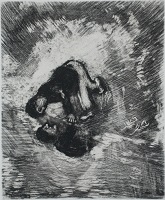
Marc Chagall: The Fables of La Fontaine
From the Museum Collection
Marc Chagall (1887–1985) was born to a Jewish family in Vitebsk, then part of Imperial Russia. Amid the Russian Revolution and the upheavals of war, he moved between Moscow, Berlin, New York, and Paris, yet continued to captivate audiences worldwide as a “painter of love,” whose work is imbued with a deep and enduring gaze toward his homeland. The Fables of La Fontaine, inspired by a cornerstone of French literature, represent a culmination of Chagall’s artistic vision. Transcending nationality, ethnicity, and the experience of war, these works transform hope into a poetic visual language that continues to resonate with us today. This exhibition presents all one hundred works from the Museum’s Mochizuki Tomiaki Collection, shown in two parts.
Image: Marc Cagall, From the series The Fables of La Fontaine, "The Man and His Image", 1927-30/ published 1952, Museum collection (Mochizuki Tomiaki Collection)
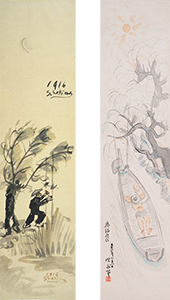
Reminiscences of Fukagawa: Ito Shinsui and Sekine Shoji
Ito Shinsui (1898–1972) and Sekine Shoji (1899–1919) were childhood friends who grew up in Fukagawa Ward of Tokyo City, now part of Koto Ward, Tokyo. Aspiring to become painters, the two maintained a close and stimulating relationship until Sekine’s untimely death at the age of twenty. This exhibition presents, for the first time, early works by Ito Shinsui from the 1910s, shedding light on the little-known youthful works of this later nationally celebrated artist. Alongside these are representative works by Sekine Shoji, tracing the mutual influence the two artists exerted on one another.
Images:[left] Sekine Shoji, Farmer, 1916, Museum collection; [right] Ito Shinsui, [An Angler in a Small Boat], 1919, On loan to The Museum of Modern Art, Kamakura & Hayama
Suda Yoshihiro Exhibition
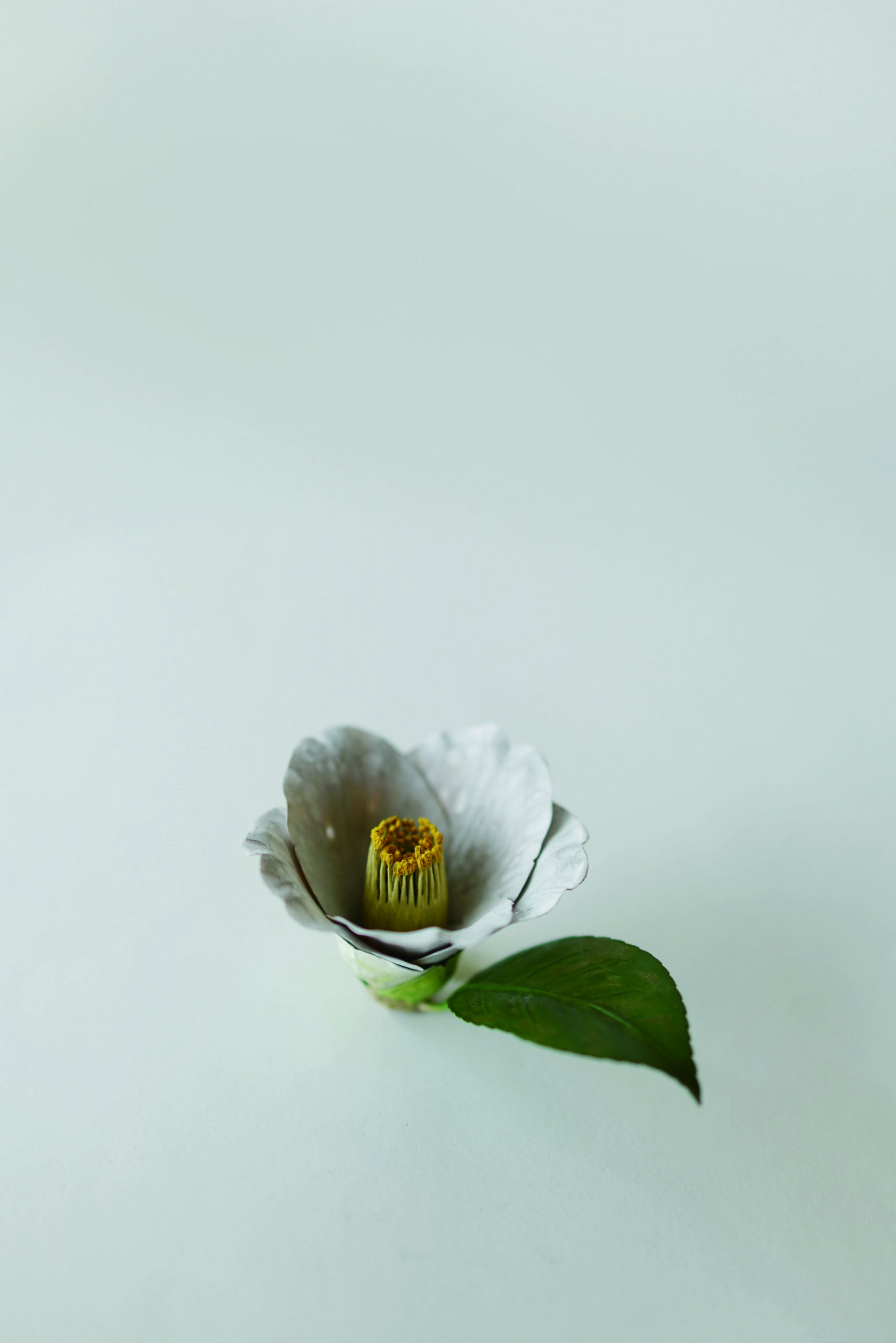
Suda Yoshihiro (1969–) is known for installations in which meticulously carved flowers and plants, rendered with striking realism, are placed within exhibition spaces, transforming the space itself into a work of art. Exhibited widely in Japan and abroad, these familiar forms appear to grow or be arranged naturally within the gallery, quietly unsettling the viewer’s perception by blurring the boundary between nature and art.
Focusing primarily on new works, this exhibition includes pieces inspired by plants found in and around the Museum in Hayama. Within this setting, surrounded by sea and mountains, a space emerges that transcends the conventional division between nature and art. The exhibition also presents works selected by the artist from the Museum’s collection together with related new pieces, creating a site for unexpected dialogues that cross time and context.
Image: Suda Yoshihiro, Camellia, 2026, Artist’s collection
Tanaka Takashi: Traces of Color - From Life of Woman
From the Museum Collection
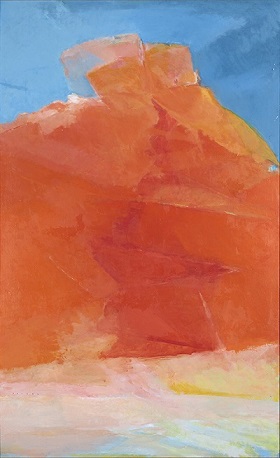
In 1957, Tanaka Takashi (1921–2014), then an emerging artist who had just received the inaugural Yasui Prize, created the mural Life of Woman for the tea room of the former Kamakura building of the Kanagawa Prefectural Museum of Modern Art. Following the building’s closure in 2016, the mural was relocated to the foyer in front of the auditorium at the Hayama building. This year marks the seventieth anniversary of its creation and the tenth anniversary of its relocation. Centered on Life of Woman as a pivotal point in Tanaka’s career, this exhibition traces his artistic trajectory primarily through works from the Museum’s collection.
Image: Tanaka Takashi, Colored Light, 2001, Museum collection. Photo: Takenaka Haruji