
Exhibitions
HAYAMA 2026
Unprecedented: Women Photographers from the GDR
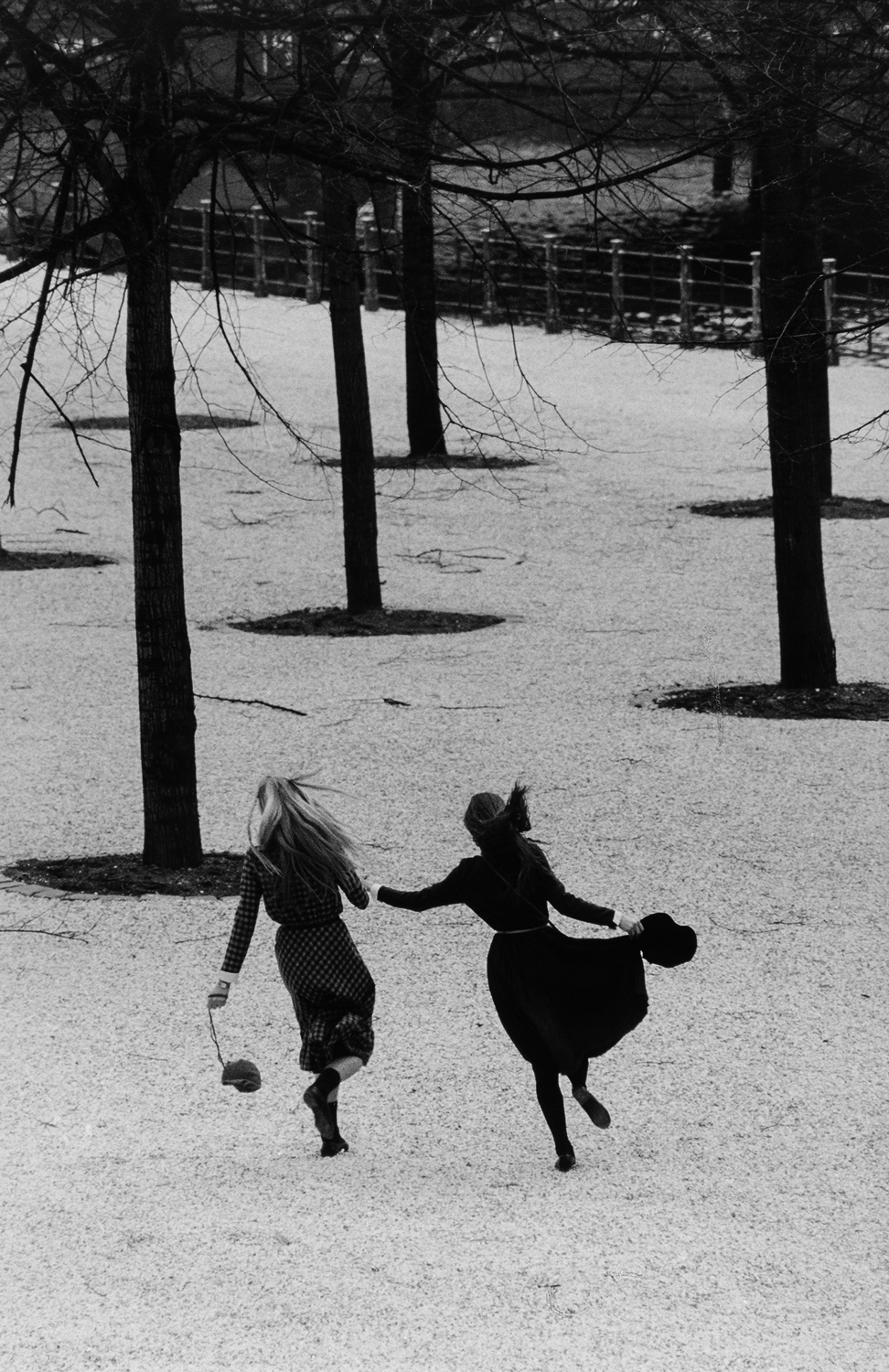
In 1949, Germany was divided into two countries: the German Democratic Republic (GDR) and the Federal Republic of Germany (FRG). Women who built careers as photographers in the GDR and produced outstanding bodies of work offer perspectives that have often been overlooked in efforts to reassess the history of German photography. From the late 1970s onward—when photography was recognized as an autonomous art form in both Germanys—women photographers increasingly worked across a range of contexts, including state commissions, magazines, and independent projects, and circulated their work widely. This exhibition brings together documentary, street, fashion, portrait, and conceptual photography, reflecting a dual focus on depicting the GDR in all its complexity and exploring the possibilities of the medium. Featuring the work of 15 women photographers—drawn largely from the Sven Herrmann Collection, renowned for its vintage prints, and presented by Stiftung Reinbeckhallen—it highlights artists who were significant in their time and remain influential today. Through their work, viewers encounter nuanced perspectives and assured techniques brought to bear on society and everyday life in a country that no longer exists, and are invited to consider their role in diversifying the GDR’s visual culture.
Image:Sibylle Bergemann, Anette and Angela, Lustgarten, Berlin, 1982 © Estate Sibylle Bergemann. Courtesy Loock Galerie, Berlin
The Museum of Modern Art, Kamakura and Art of the Showa Era
From the Museum Collection
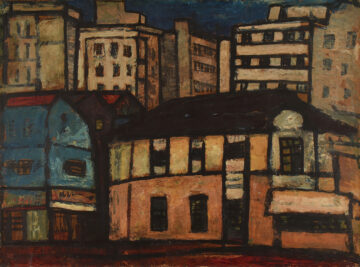
In 1951, the Museum opened within the grounds of Tsurugaoka Hachimangu Shrine in Kamakura City. Designed by Sakakura Junzo (1901–1969), the building became affectionately known as the “Kamakura Museum of Modern Art (Kamakin),” and was later designated an Important Cultural Property after the building closed.
In commemoration of the 100th anniversary of the Showa era, this exhibition presents masterpieces by artists shown at the Museum during that period, including Matsumoto Shunsuke (1912–1948), Chokai Seiji (1902–1972), and Yamaguchi Kaoru (1907–1968). These works are presented alongside archival materials documenting the building of The Museum of Modern Art, Kamakura, itself regarded as a landmark of Showa-era architecture.
Ansei and Toshiko Uchima: Weaving Colors and Memories
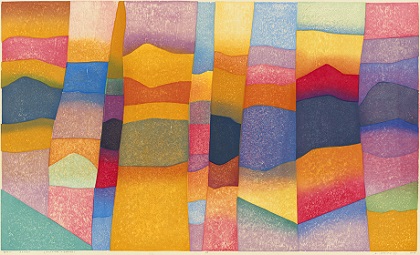
Born in the United States as a second-generation Japanese immigrant, Ansei Uchima (1921–2000) moved to Japan in 1940 with the aspiration of becoming a painter. After the war, he became acquainted with Koshiro Onchi (1891–1955) and Shiko Munakata (1903–1975) , immersing himself in the world of creative printmaking. Through various artistic transitions, he developed his own woodblock print technique, "weaving color planes" (shikimen-ori), which led to the creation of his series Forest Byobu. This exhibition also highlights works by his wife, Toshiko Uchima (1918–2000), celebrated for her fantastical assemblages, alongside works by artists such as Isamu Noguchi (1904–1988), offering a window into the creative world of the Uchima couple.
Image: Ansei Uchima, Forest Byobu (Autumn-Stone), 1979, Private collection
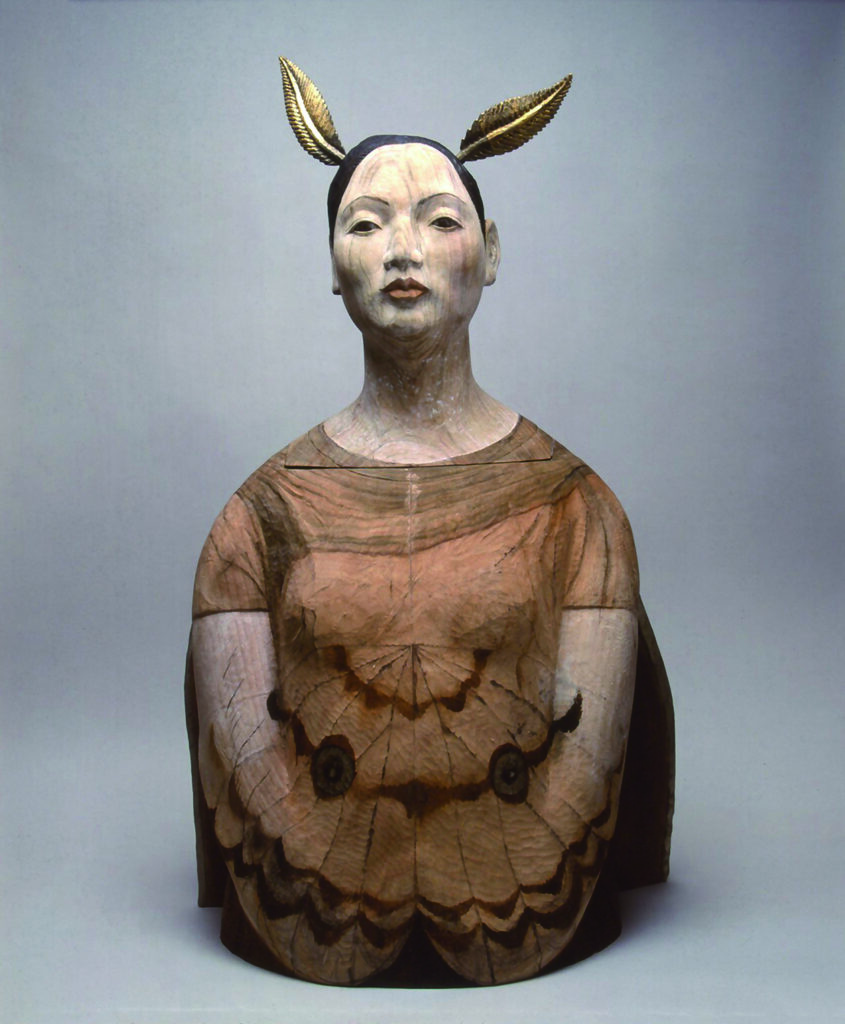
New Treasures of the Museum Collection II: Sculptures of Recent Acquisition
This is the second exhibition in the "New Treasures of the Museum Collection" series, which introduces newly acquired works. Following "New Treasures of the Museum Collection I" (2024, Kamakura Annex), which showcased paintings acquired by the Museum from fiscal years 2015 to 2019, this exhibition will feature sculptures and three-dimensional artworks acquired between fiscal years 2020 and 2024, focusing on pieces that will be displayed publicly for the first time since their acquisition. The exhibition includes works such as Sumi Wakiro’s EVIDENCE, which was donated after being exhibited in his solo exhibition held at The Museum of Modern Art, Kamakura, and Kurokawa Hirotake's Spartoi No. 20, transferred from Kanagawa Kenmin Hall. All works featured in this exhibition were donated to or transferred into the Museum's collection through generous contributions from the artists and related parties. This exhibition is intended to honor and preserve these "treasures" for future generations.
Image: Esashi Tomoko, Moth Woman, 1999, Museum collection